Africa Celebrity News Music & Entertainment News Nigeria South Afrcan Music by Emmanuel Alade January 27, 2026
298Views 0Comments

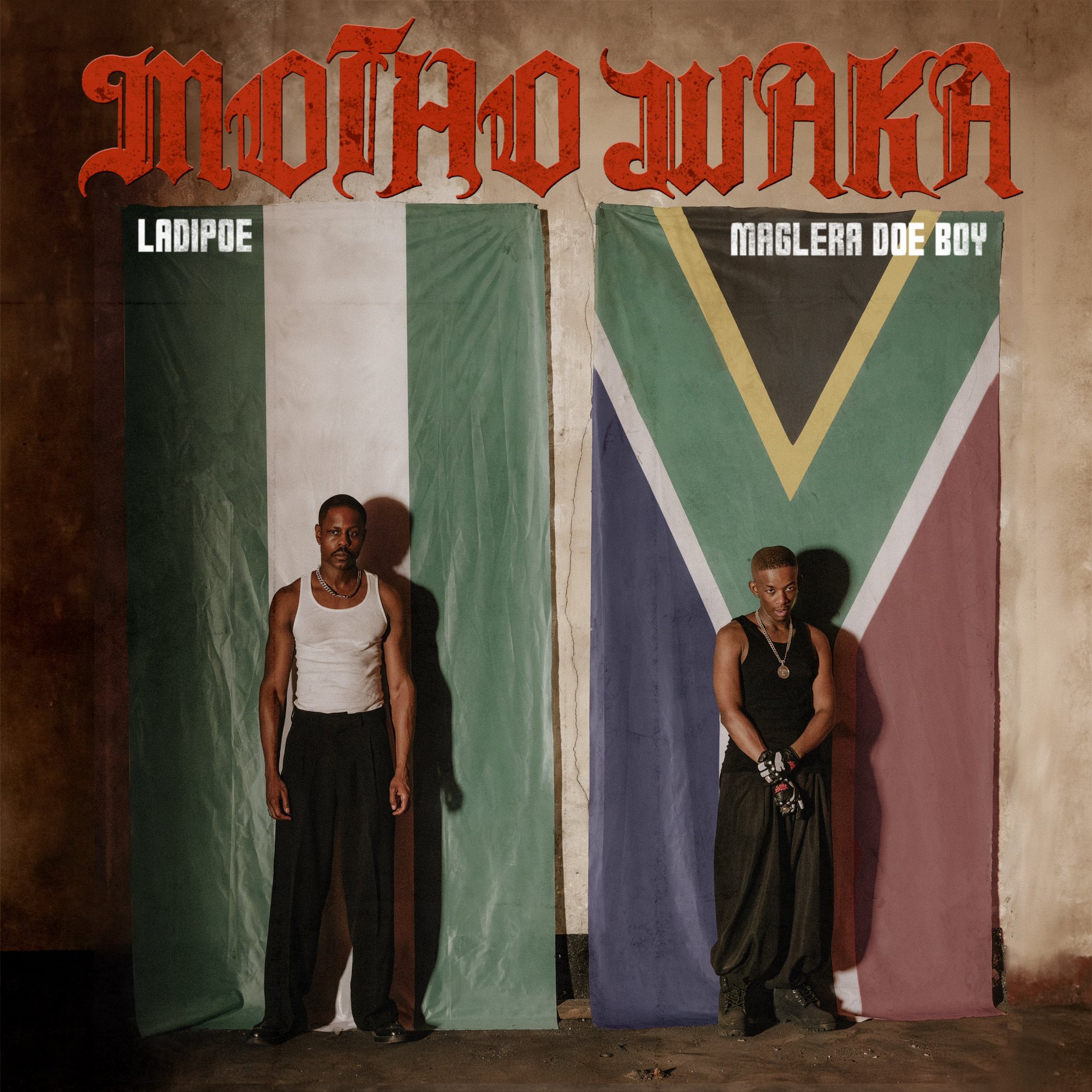
Nigerian rap star Ladipoe and South African hip hop heavyweight Maglera Doe Boy have delivered one of 2026’s most compelling cross-border collaborations with their new single Motho Waka. The track brings together two of Africa’s most respected lyricists in a meeting of cultures, stories, and street-rooted expression.
Motho Waka, which translates to “My Person” in Setswana and Sotho, is built around themes of loyalty, brotherhood, and identity beyond borders. From the first bar, the song establishes an emotional core that speaks to shared African experiences rather than commercial trends. This is not a record designed for shortcuts to virality. It is a deliberate, purpose-driven collaboration grounded in storytelling and substance.
The production leans into a gritty hip hopiano soundscape, fusing boom-bap energy with dark, minimalist textures. A haunting vocal sample floats over deep bass and sparse percussion, giving both artists space to deliver their verses with clarity and weight. Ladipoe opens the track with calm confidence, reflecting on growth, pressure, and the constant struggle to remain authentic in a demanding industry.
Subscribe to Our YouTube Channel
Maglera Doe Boy follows with a powerful verse in English and Sotho, bringing raw township realism into the mix. His gravel-toned delivery adds urgency and depth, creating a natural fusion between Lagos lyricism and South African street philosophy. Instead of competing for attention, both rappers move in sync, building a shared narrative rooted in African resilience and truth.
For Ladipoe, Motho Waka reinforces his long-standing vision for pan-African rap unity. By collaborating with Maglera Doe Boy, he strengthens the bridge between two of the continent’s most influential hip hop cultures. The result is a track that feels both local and continental in its impact.
Gritty, intentional, and culturally rich, Motho Waka stands out as more than just a collaboration. It is a defining hip hop moment for 2026 and a strong reminder that African rap thrives most when it tells its own stories in its own voice.

